







I. Execution Standards
This product is manufactured in accordance with authoritative industry standards from multiple countries, as follows:
International Standards: ANSI / ASME B16.5 (NPS 1/2 to NPS 24)
• Applicable to: NPS 1/2 ~ NPS 24 (inch diameter)
• Pressure Ratings: 150, 300, 600, 900, 1500, 2500 LB
• Applications: The most mainstream standard for petroleum, chemical, valve, and pipeline applications.
International Large Diameter Standards: ANSI / ASME B16.47 (NPS 26 to NPS 60)
• Applicable to: NPS 26 ~ NPS 60 (extra-large diameter)
• Applications: Large pipelines, storage tanks, power plants, long-distance pipelines
European Standards: DIN 2501 / 2543 / 2545 / 2632 / 2633 / 2634 / 2635 / 2636 / 2637 / 2638
• Pressure: PN6, PN10, PN16, PN25, PN40
• Structure: Plate flange, necked flange, blind flange, sliding flange, etc.
EU Latest Standard: EN 1092-1
• Type: 01~04 Plate flange, necked weld neck flange, blind flange, etc.
• Pressure: PN6~PN100
Chinese National Standards: GB / HG / SH / JB (Chinese Standards)
GB: National Standard (General)
HG: Chemical Industry Flange (Most commonly used in chemical industry)
SH: Petrochemical Industry (Sinopec, PetroChina)
JB: Machinery Industry (Old machinery industry)
II. Product Features
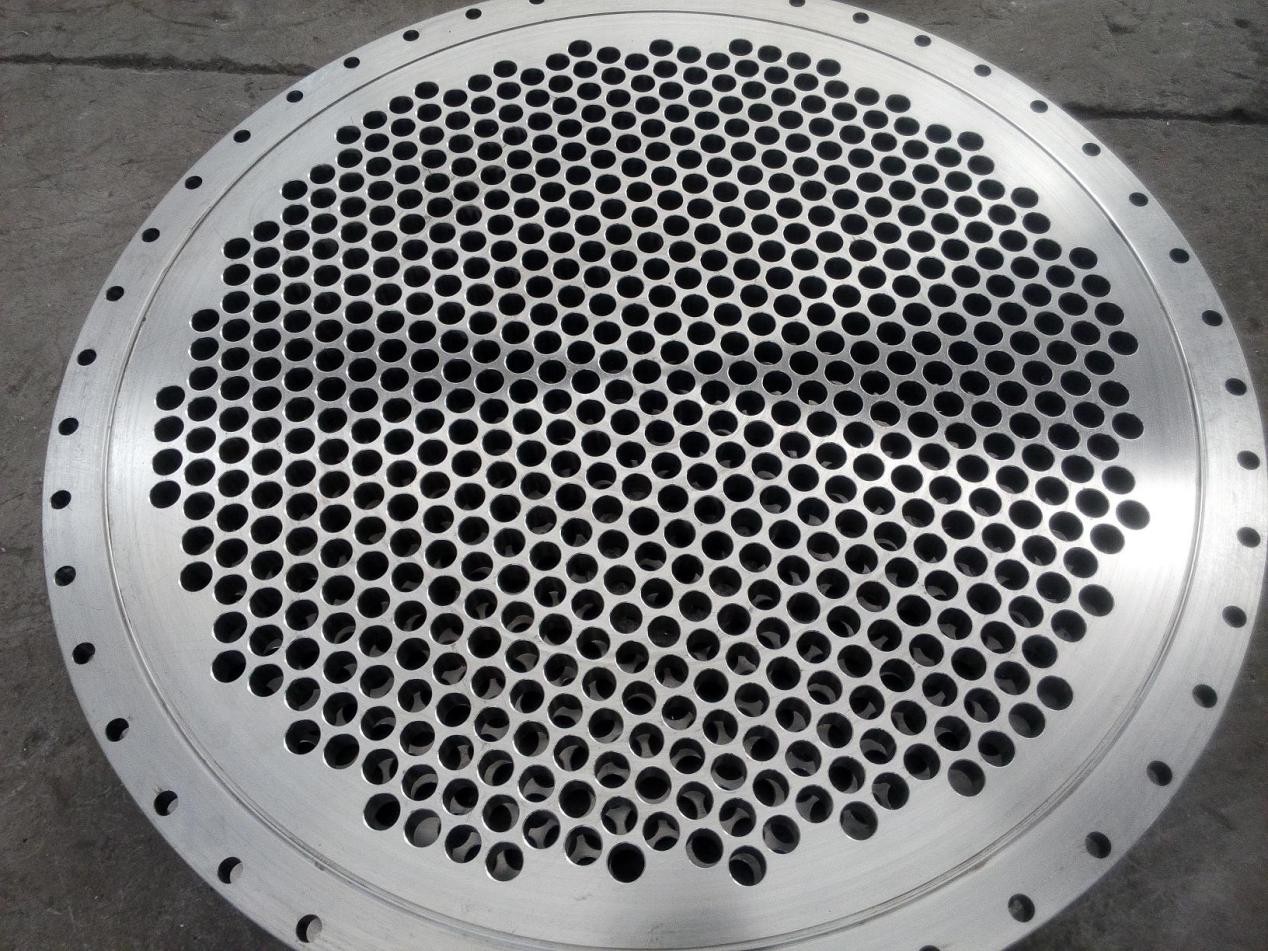
• Precision Hole Diameter Machining: Utilizing advanced CNC drilling technology, high hole diameter accuracy and low surface roughness ensure a tight and reliable connection between the heat exchanger tubes and the tube sheet.
• High-Strength Structure: Optimized heat treatment processes enhance the material"s mechanical properties, enabling the tube sheet to maintain excellent stability under high pressure and high temperature environments.
• Strong Corrosion Resistance: For different operating conditions, corrosion-resistant materials or special surface treatments can be selected, effectively extending the service life of the tube sheet in harsh environments.
III. Pressure Ratings
•ANSI Class: 150, 300, 600, 900, 1500, 2500
•PN: 6, 10, 16, 25, 40, 63, 100, 160, 250, 320, 400
IV. Material Range
Carbon Steel:
A105, American Standard Carbon Steel (corresponding to B16.5)
A350 LF2/LF6, American Standard Low Temperature Carbon Steel
A694 F42/F52/F60/F65/F70, American Standard High Pressure Forging Carbon Steel (Pipeline Steel)
20#, Commonly Used Carbon Steel in Chinese Standards
16Mn, Low Alloy High Strength Carbon Steel in Chinese Standards
Alloy Steel (High Temperature/High Pressure):
A182 F11, F12, F22, American Standard Chromium-Molybdenum Heat-Resistant Alloy Steel (Power Plants, High-Temperature Steam)
15CrMo / 14Cr1Mo / 12Cr1MoV, National Standard Heat-Resistant Alloy Steel
20MnMo, National Standard Alloy Structural Steel
Low Temperature Steel (Sub-zero Environments):
16MnD, Low Temperature Carbon Steel
09MnNiD, Low Temperature Low Nickel Steel
10Ni3MoVD, Cryogenic High-Strength Steel
Stainless Steel (Corrosion Resistant):
A182 F304 / F304L, 304 / Low Carbon 304
A182 F316 / F316L, 316 Molybdenum Stainless Steel (Better Corrosion Resistance)
S32168, National Standard 321 Stainless Steel (Titanium Stabilized)
Special Alloys (Strong Corrosion):
Hastelloy C276, Super Corrosion-Resistant Alloy
N08367 (AL-6XN), High-Molybdenum Super Austenitic Stainless Steel
V. Size Range
Diameter: Customizable to heat exchanger specifications, ranging from several hundred millimeters to several meters.
Thickness: Depends on pressure, temperature, and other operating conditions; thickness ranges from tens to hundreds of millimeters.
Aperture and Spacing: Aperture size and spacing can be precisely designed and manufactured according to the specifications and arrangement of the heat exchanger tubes.
All can be customized according to drawings or requirements.
VI. Quality Control and Inspection (Mandatory for Factory Shipments)
Dimension Inspection
Check: Outer diameter, inner diameter, thickness, bolt holes, sealing surfaces, etc., to ensure they meet standards.
•Tensile, Impact, and Hardness Testing
Check material strength, toughness, and hardness to ensure it will not crack or break.
•Ultrasonic Testing (UT) / Penetrant Testing (PT) / Magnetic Particle Testing (MT)
Check for internal/surface cracks, porosity, and defects:
•UT: Checks for internal defects
•PT: Checks for surface opening defects (commonly used for stainless steel)
•MT: Checks for surface defects (commonly used for carbon steel)
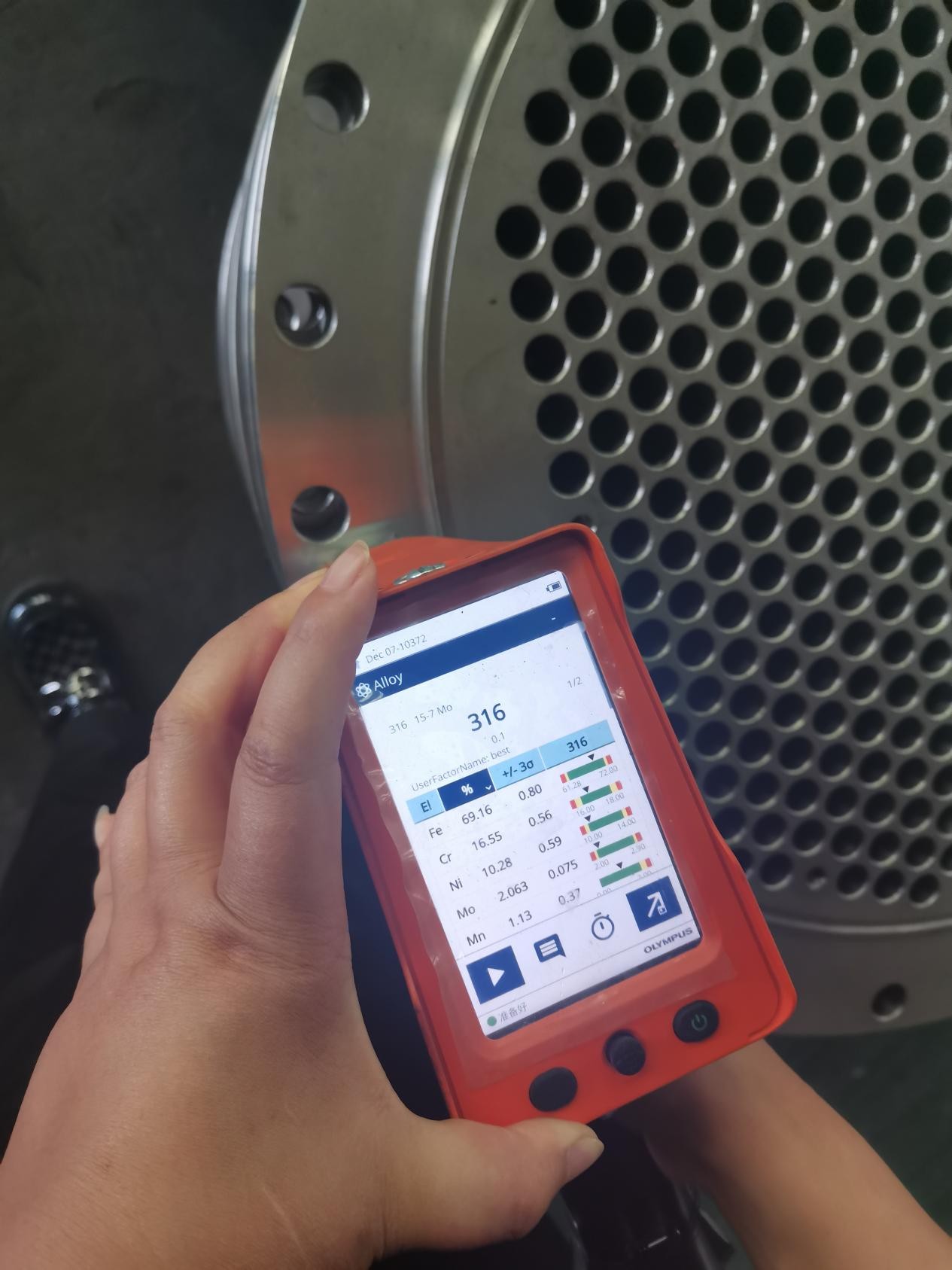
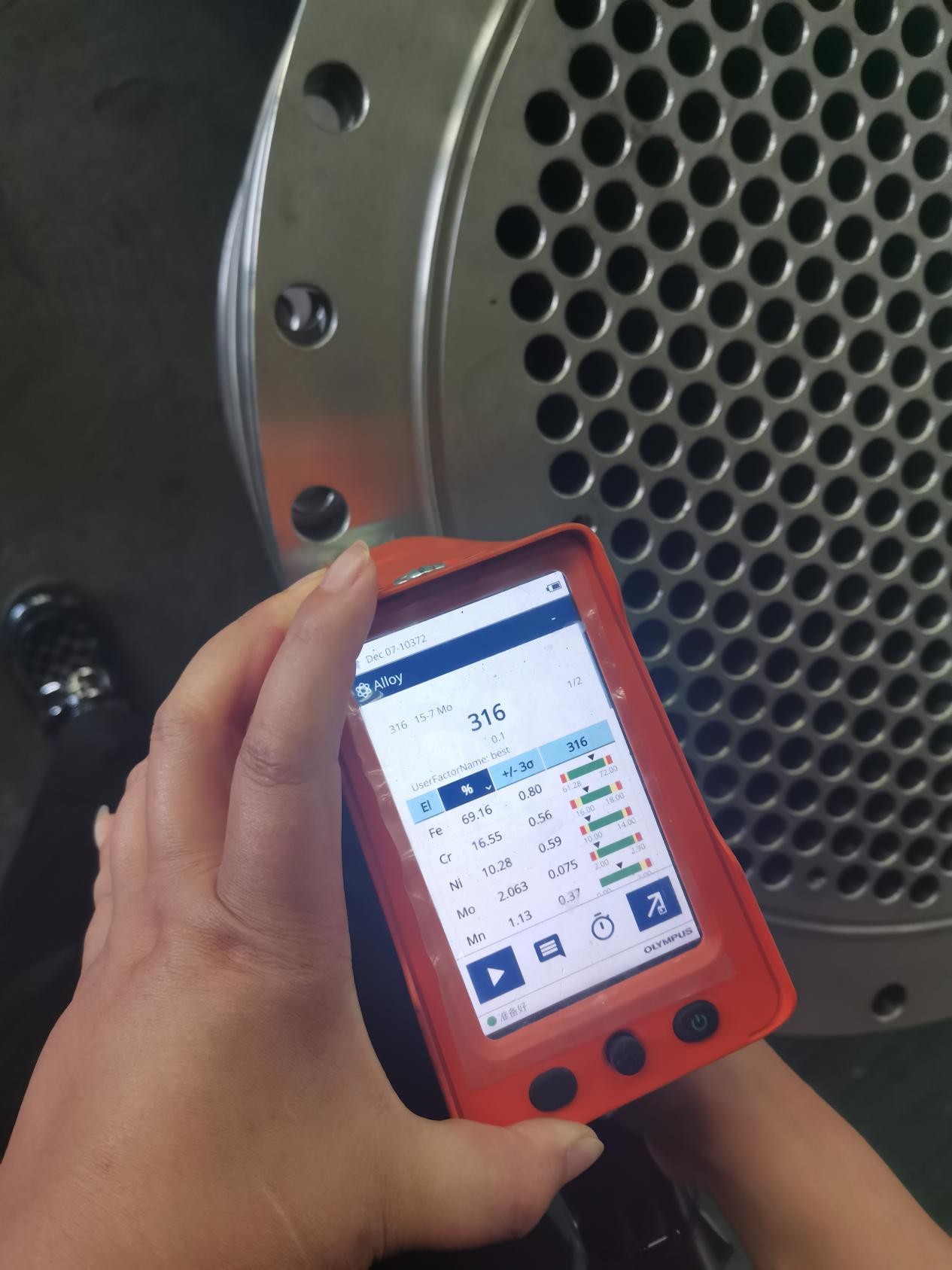
Material Analysis (PMI)
On-site composition analysis using instruments to ensure the material is genuine (304 is 304, 316 is 316).
Certificate of Quality: Complies with EN 10204 3.1 standard
EU-recognized formal material certificate.
VII. Application Areas
The products are mainly used in industries such as petroleum, chemical, power plants, pipeline engineering, shipbuilding, and water treatment.
They conform to international standards, have stable quality, and can withstand various harsh working conditions such as high pressure, high temperature, and corrosiveness.
VIII. Packaging and Delivery
Packaging method: Wooden crate packaging or pallet + waterproof membrane wrapping
Suitable for export transportation, providing protection against collision, moisture, and rust.